Once again, what an awesome experience today has been at PTS. A reminder of why I am here.
I have been encouraged and challenged throughout the day in such an affirming manner. Thank you to all the fellas that I came across today because you each really helped me (didn't I tell you my personality class revealed I like to affirm people?)
I was able to see the power of prayer and the power of genuine fellowship with Christian brothers, who may disagree over particular topics, but still support, examine scripture and pray for each other.
Even the experience of preaching was a positive, exciting experience. Helping me see the joy I find in preaching...of course with one valuable lesson. Should you use a sermon illustration from another pastor, make sure that it is not a common illustration that everyone else would have heard...and especially make sure it was not used in Chapel last week--otherwise it is quite obvious that you don't go to Chapel.
This whole experience today, however, allowed me to come home and pray with in manner with my wife, that at the end she said, "wow that is the best prayer you have ever given."
Truly that is a result of being grounded in strong, prayerful fellowship with men I respect.

Thursday, February 23, 2006


Wednesday, February 22, 2006

Tuesday, February 21, 2006
Where did the Spirit go?
As I was leaving B&N this afternoon I passed by the magazine rack and saw this:

It made me laugh, then it made me think...
Though the difference between Religion vs. Spirituality debate is often not that interesting to Christians, especially to Seminarians; I think it is an understandable sentiment held by many young americans (i.e. I am spiritual not religious). This magazine cover illuminates that dichotomy.
Spiritual is freeing, relaxing, uplifting, edifying, meditative, and felt as a lifting from the ground up.
Religion is constrictive, anal, repressive, destructive, lecturing and felt as a smashing weight from above.
Perhaps one of the reasons contemporary people feel this way about established Western Religions, Christianity in particular, is because we have ignored the Spiritual component of the our faith. The entire Third person of the Trinity has become an afterthought. In part, thanks to Augustine--then probably someone others--and then due to Modernity.
Augustine may not have intended but certainly opened the door for a piss poor pneumatology (ah stupid silent p looses the alliteration effect), because suddenly the Holy Spirit became the Spirit of Christ.
Rather than being a separate person, it became the relationship of the Father to the Son, or worse to be represented solely by the Church. It is hard enough to conceptualize a fully human, fully god Jesus Christ--why through an ephemeral being like the Holy Spirit into the mix? Instead let’s just ignore it, or rationalize it away call it the True Church.
Our weak pneumatology has led to us to favor a stagnate, anal, repressive religion because we loose sight of the fact that God is still creatively active in our world. A strong pneumatology would believe in the Spirit's ability direct and guide the church through all of these controversial issues, through postmodernity, through any troubles because it realizes that innovation, meditation, creativity, joy, peace, happiness, fruitfulness, etc. are all gifts of the Spirit. It would believe that no matter how big of mistake the Church makes that the Godhead is still at work.
So why do many American's view Christianity as a old, boring, repressive religious system while Spirituality is hitting the cultural pulse. Perhaps it is because we have failed to honor, glorify and worship the Holy Spirit.
So it is actually not that funny, but kind of sad, that a Religion which believes that a Spirit is one of the essential persons of our Godhead is not considered Spiritual.
Where did the Holy Spirit go in our faith?
It made me laugh, then it made me think...
Though the difference between Religion vs. Spirituality debate is often not that interesting to Christians, especially to Seminarians; I think it is an understandable sentiment held by many young americans (i.e. I am spiritual not religious). This magazine cover illuminates that dichotomy.
Spiritual is freeing, relaxing, uplifting, edifying, meditative, and felt as a lifting from the ground up.
Religion is constrictive, anal, repressive, destructive, lecturing and felt as a smashing weight from above.
Perhaps one of the reasons contemporary people feel this way about established Western Religions, Christianity in particular, is because we have ignored the Spiritual component of the our faith. The entire Third person of the Trinity has become an afterthought. In part, thanks to Augustine--then probably someone others--and then due to Modernity.
Augustine may not have intended but certainly opened the door for a piss poor pneumatology (ah stupid silent p looses the alliteration effect), because suddenly the Holy Spirit became the Spirit of Christ.
Rather than being a separate person, it became the relationship of the Father to the Son, or worse to be represented solely by the Church. It is hard enough to conceptualize a fully human, fully god Jesus Christ--why through an ephemeral being like the Holy Spirit into the mix? Instead let’s just ignore it, or rationalize it away call it the True Church.
Our weak pneumatology has led to us to favor a stagnate, anal, repressive religion because we loose sight of the fact that God is still creatively active in our world. A strong pneumatology would believe in the Spirit's ability direct and guide the church through all of these controversial issues, through postmodernity, through any troubles because it realizes that innovation, meditation, creativity, joy, peace, happiness, fruitfulness, etc. are all gifts of the Spirit. It would believe that no matter how big of mistake the Church makes that the Godhead is still at work.
So why do many American's view Christianity as a old, boring, repressive religious system while Spirituality is hitting the cultural pulse. Perhaps it is because we have failed to honor, glorify and worship the Holy Spirit.
So it is actually not that funny, but kind of sad, that a Religion which believes that a Spirit is one of the essential persons of our Godhead is not considered Spiritual.
Where did the Holy Spirit go in our faith?
Sunday, February 19, 2006
TBN ruined [warning: sarcasm ahead]
I would like to thank Princeton Seminary for ruining my ability to enjoy great programming such as TBN's movie The Perfect Stranger. Granted I should have gone to sleep, but this heart-wrenching hour long movie grabbed my channel surfing attention.
In it a lawyer meets for dinner with a Perfect Stranger. I missed the first few minutes, so I am not sure if the lawyer got setup on the blind date with this Perfect Stranger. But the Stranger turns out to be Jesus. Of course, this Jesus representation has him in an Armani Suit, blonde hair and blue eyed.
Who needs seminary when in one hour, Jesus explains
what is wrong with all other religions
why Christianity is the only way
how Jesus is God, otherwise he was a liar or a lunatic
how the resurrection is right (N.T. Wright argument)
penal substitution
what heaven and hell is
why bad things happen to good people
how there is a great divide between us and God
all while eating in a four star resturant with only WASPs chowing away in the background.
Still not as classic as Without Reservation
In it a lawyer meets for dinner with a Perfect Stranger. I missed the first few minutes, so I am not sure if the lawyer got setup on the blind date with this Perfect Stranger. But the Stranger turns out to be Jesus. Of course, this Jesus representation has him in an Armani Suit, blonde hair and blue eyed.
Who needs seminary when in one hour, Jesus explains
all while eating in a four star resturant with only WASPs chowing away in the background.
Still not as classic as Without Reservation
the problem
I have a sense of calling to be involved in a church who is willing to explore more contemporary styles of worship. The problem is that for most churches those opportunities come on Sunday nights, which causes the problem:
It interfers with the Daytona500 and west coast races, not to mention Sunday Night football.
It interfers with the Daytona500 and west coast races, not to mention Sunday Night football.
Tuesday, February 14, 2006
warning, addictive
--Way too much fun--
:Celeberty Facial Recognition:
Who do you look like?
go here


Lindsay (61%): Grace Kelly Wes (54%): Dennis Quad
Of course some of the other photos I ran connected me to Condalisa Rice, one was with a beard too!
go here

Sunday, February 12, 2006









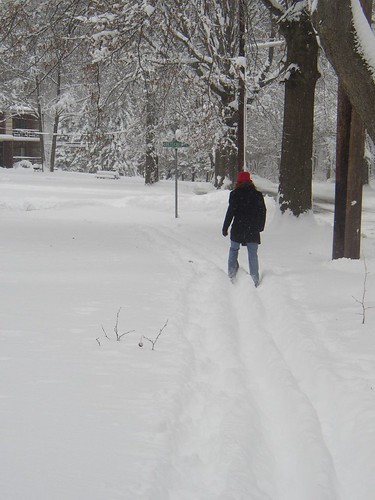











Sacramental HIV/AIDs

“Biggest re-conceptualization of the church is that something has to get broken where we see ourselves as one with the people of the rest of the world and not distant. And so when we see pain and suffering we move into it.”--Bruce Marcey
Yesterday, my studies collided into a single thought. Things I had been contemplating from class and from textbooks came together in one awesome sermon at Warehouse242 called HIV/AIDs. In it Bruce Marcey, the senior pastor, challenged us to not only reach out to the HIV/AIDs population in Charlotte, but also realize that HIV/AIDs is amidst the congregation. Too often the church tries to blame and keep these people at arms length with an occasional pity-ministry; also we pretend that no one in the pew may have HIV/AIDs.
“People suffer with a debilitating disease that cause them to feel isolated, broken and lonely. And the church has stood back and done very little about it...”
However, there will be people in the pews suffering silently and desperately in need of the Gospel. At Warehouse242, they are offering to give AIDs testing to the community, not in an attempt to alienate and isolate those who are suffering, but for the church to acknowledge that there are people broken and suffering within the community and the church needs to learn how to respond.
Imagine AIDs testing being done at your church. What a radical idea. Think of First Presbyterian of _______ opening up the fellowship hall for CEOs and homeless, Soccer Moms and Prostitutes, Elderly and Teenagers sitting in the same chair to be tested. It is scandalous because it says that “those” people, who are in need of community and support, are us. And that this disease is not an outside problem, but one inside the church. The people suffering from this disease become an important part of the community—not because they become a pet-project, some program or agenda for the church, but because they are the Church.
“Imagine your life lived with taking drugs that are simply trying to hold [death] at bay. Imagine your life that if you have sexual contact with someone [you love] it could be a death sentence for them. Imagine your life that if most places you walk into a room and tell them you have HIV/AIDs they are going to take a step back at least internally. Imagine that life. What do we do amidst of that?”
This sermon resonated with my studies because it brought to life an interesting phrase I read the other day. Jon Sobrino called the poor a “quasi-sacrament:”
…the poor are a sort of sacrament of the presence of Christ…‘For the poor challenge the church constantly, summoning it to conversion.”
Reading this and coming to realize its validity helped me reconsider my biggest struggle with scripture.
I have always hated Jesus' phrase, “The poor will always be with you.” It seemed to legitimize poverty and suggest that our efforts are fruitless. However, by viewing it through Sobrino’s lens, poverty is a necessary component of the life because it allows “a visible sign to represent an invisible reality.” People who are suffering through poverty or through HIV/AIDs, are not guilty (i.e. laziness or sexual promiscuity) that should leave them isolated and exclude from the church; rather they are as essential as bread, wine, and water.
It is through ordinary things that the presence of Jesus Christ makes them extraordinary. Maybe that is why Jesus says:
Matthew 25:37-40
Then the righteous will answer him, 'Lord, when did we see you hungry and feed you, or thirsty and give you something to drink? When did we see you a stranger and invite you in, or needing clothes and clothe you? When did we see you sick or in prison and go to visit you?'
"The King will reply, 'I tell you the truth, whatever you did for one of the least of these brothers of mine, you did for me.'
To be a sacrament means that Jesus needed to order its institution. So rather than viewing HIV/AIDs as the result of sin, perhaps Jesus Christ has transformed it to show something extraordinary, himself.
A Sacramental HIV/AIDs view would say that it is through the brokenness of those suffering within the church that the whole community is visibly reminded—sidenote: HIV is not noticeable—of all of our brokenness. And, we are also visibly reminded that the Church is called to show the invisible reality that God graciously loves and liberates all who are oppressed. So rather than separating those with AIDs from the church, we should be embracing them as essential representations of God.
With a snow day, enjoy internet church and listen to this sermon: Justice: HIV/AIDs
And surf:
To learn even more, check out the resources Warehouse 242 has identified for us:
What’s your AIDS IQ? Take the Quiz at: www.amfAR.org
Know, Prevent, Care, Cure: www.weallhaveaids.com
From the experts: www.ihv.org
Friday, February 10, 2006
Postmodern Running
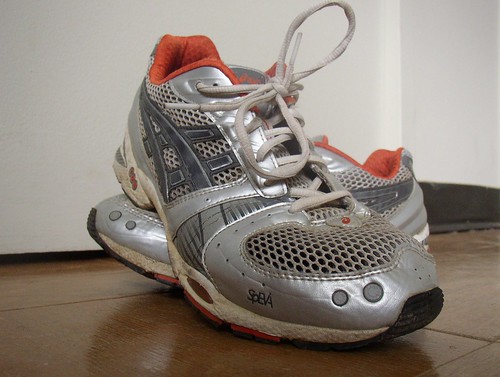
Process thought has even hit the running world. Depending upon the situation and context, runs--just like art--will produce different outcomes. Our experiences change what we bring to the table, or to the running trail; Making each run its own unique experience.
Read this in my Runner's World magazine the other week after a discussion about postmodernity.
By opening up and see the bigger picture, one stops focusing upon the product--a particular speed--and enjoy the process.
Going with the Flow
by John Bingham
It's been said that you can never put your foot in the same river twice. Rivers are alive, flowing, and in constant motion. The river that was there a moment ago is long gone. The same is true for music, art, and movies. We never really hear the same song twice or see the same piece of art twice. What we bring to a second or third or hundredth exposure to a song or a painting is always different than the time before. We bring memories, feelings, and sensations. And the effect is cumulative.
Why is it then that runners think they can run the same route or same race twice? And why do runners think that comparisons made between running the same distance on different courses, on different days, has any validity at all?
You know what I'm talking about. I've done it, and I'm sure you have, too. We run our favorite route one day, then run it again a couple days later and beat ourselves up because we've finished a few seconds (or minutes) slower. Or we congratulate ourselves because we've run it a few seconds (probably not minutes) faster.
Wednesday, February 08, 2006
steps forward and backward
Bush released his new budget...
Increase of $184million for activism against homeslessness
$439billion in defense...9 more unmanned predator drones. [warning, subtle, unbiased comment: a $50billion increase for a war whose "mission is accomplished"]
Increase of $184million for activism against homeslessness
$439billion in defense...9 more unmanned predator drones. [warning, subtle, unbiased comment: a $50billion increase for a war whose "mission is accomplished"]
WHITE HOUSE ANNOUNCES FY 2007 BUDGET REQUEST
Feb 6 2006
Contact: Meighan Stone
The White House today
announced its budget request for Fiscal Year 2007,
with an increase of $2
billion for the overall fight against global AIDS and
extreme poverty. With
significant funding increases
concentrated on the President's AIDS
Initiative and the Millennium Challenge
Account, the budget request also
contains cuts to core humanitarian and
development accounts for development
assistance, initiatives that help mothers
and children in the world's
poorest countries and life-saving funding for The
Global Fund to Fight AIDS,
TB and Malaria.
Wednesday, February 01, 2006
federal offense
 shhh...don't tell Anna Escobedo Cabral.
So after my run yesterday this is what I find when I get home. Savannah has managed to push open the bedroom door, fished my wallet out of my jeans (which were strewen on the floor), taken all the dollar bills out of my wallet, and subsequently ripped a corner off every single bill!
Thankfully I also learned that as long as it is 3/4s of a bill it is still legal tender.
making the mundane sacred
So, I like art and think it can be used in worship, if done with explanation and sensitivity.
But why do I like art? Because it uses the mundane to describe the indescribable.
It takes a two dimensional space, or watered-dirt (clay) and creates depth in a new manner.
In doing so it connects us with the Creator.
In the Christian faith, we believe that the Creator was not content with merely “creating” but also wanted to become part of creation, therefore God took on human skin (seminary qualification: “became fully human”).
The incarnation makes the mundane sacred. By Jesus being fully human, he accepted the risk, vulnerability, and humiliation of human life.
Not only that, but by dying upon a rugged cross, God took a mundane torture device and transformed it into a sacred tool for dispensing grace. By using bread and wine, Jesus took base elements to represent the divine reality.
Visual art, when used appropriately, is not an idol—which Deuteronomy speaks against—but a mundane device that becomes transformed into a sacred tool. The process of taking charcoal, clay, bronze, paint, or other base earthly elements and developing art which transcends physical meaning to provide emotional and spiritual meaning may help humanity connect with our Incarnate God and should not be dismissed. Since our faith rests in the Incarnation, we hold onto the idea that God has chosen to make sacred the mundane, and graciously invited us into that process
But why do I like art? Because it uses the mundane to describe the indescribable.
It takes a two dimensional space, or watered-dirt (clay) and creates depth in a new manner.
In doing so it connects us with the Creator.
In the Christian faith, we believe that the Creator was not content with merely “creating” but also wanted to become part of creation, therefore God took on human skin (seminary qualification: “became fully human”).
The incarnation makes the mundane sacred. By Jesus being fully human, he accepted the risk, vulnerability, and humiliation of human life.
Not only that, but by dying upon a rugged cross, God took a mundane torture device and transformed it into a sacred tool for dispensing grace. By using bread and wine, Jesus took base elements to represent the divine reality.
Visual art, when used appropriately, is not an idol—which Deuteronomy speaks against—but a mundane device that becomes transformed into a sacred tool. The process of taking charcoal, clay, bronze, paint, or other base earthly elements and developing art which transcends physical meaning to provide emotional and spiritual meaning may help humanity connect with our Incarnate God and should not be dismissed. Since our faith rests in the Incarnation, we hold onto the idea that God has chosen to make sacred the mundane, and graciously invited us into that process
Subscribe to:
Posts (Atom)